
Signs You Need a
Capital Needs Assessment
HUD (And When You Don't)
A capital needs assessment is not required for every HUD property. Knowing when it is mandatory, when it helps your case, and when it is a distraction can save you time and real money.
A Systematic Look at What Your Property Will Cost to Keep
A capital needs assessment (CNA) is a formal evaluation of a property's physical condition. An assessor walks the site, documents the age and condition of major systems, and projects the repair and replacement costs over the next 20 years. The output is a written report with a funding schedule.
For HUD purposes, a CNA is not a general building inspection. It follows HUD's specific protocols, and the assessor must meet HUD's qualification requirements. A standard commercial property assessment will not satisfy HUD's underwriting desk.
The assessment covers structural systems, roofing, mechanical equipment, electrical, plumbing, elevators, exterior envelope, common areas, and individual dwelling units. Assessors sample a percentage of units rather than inspect every one, following HUD sampling guidelines based on project size.
The result feeds directly into your reserve fund plan. If HUD's underwriter sees the reserve schedule is underfunded relative to the CNA findings, the loan or subsidy approval stalls. Getting the CNA right the first time matters.
Nationwide Service
Reac Nspire Consulting serves HUD-assisted properties across all 50 U.S. states. Founded in 2020 by Sam Amoyelle, the firm focuses exclusively on federal housing inspection and compliance work.
Planning horizon required in a standard HUD capital needs assessment report
U.S. states served. Public housing authorities, multifamily owners, and HCV administrators across every region.
Year Reac Nspire Consulting was founded. Focused exclusively on HUD inspection and compliance consulting from day one.
Explore related compliance topics:
Signs You Need a HUD Capital Needs Assessment
These situations trigger a mandatory or strategically necessary CNA. If your property fits any of these, schedule the assessment before it holds up your deal.
You Are Applying for a HUD-Insured Mortgage
HUD 221(d)(4) new construction and substantial rehabilitation loans, HUD 223(f) refinance loans, and HUD 232 healthcare facility financing all require a CNA as part of the underwriting package. No CNA, no loan commitment. Learn how HUD multifamily financing works before you start the application.
You Are Requesting a Rental Assistance Demonstration (RAD) Conversion
RAD conversions from public housing to Section 8 project-based voucher or project-based rental assistance require a physical needs assessment. HUD uses the CNA to set the initial reserves and verify the rehabilitation scope. Submitting without one delays your RAD application by weeks.
Your Property Has a REAC or NSPIRE Score Below 60
A failing inspection score triggers HUD's enforcement track, which often includes a required physical needs assessment. Even when not explicitly mandated, a CNA gives you documented evidence of existing conditions and a corrective timeline, which HUD field offices accept as part of a corrective action plan. See how NSPIRE inspection results can affect your HUD funding.
You Are Renewing a Section 8 HAP Contract for 20 or More Years
Mark-to-Market restructurings and long-term HAP contract renewals through HUD's Office of Recapitalization routinely require a CNA. The reserve for replacement deposit HUD sets at renewal is based directly on the CNA findings. An outdated or low-quality CNA can leave your reserve deposit understated, causing shortfalls later.
You Have Deferred Maintenance That Has Accumulated Over Several Years
If your maintenance logs show repeated deferrals on roofing, HVAC, or plumbing, a CNA quantifies the backlog. That number helps you make the case to ownership, boards, or investors that capital funding is needed now rather than later. It also documents conditions before your next HUD REAC inspection.
You Are Planning a Low-Income Housing Tax Credit (LIHTC) Acquisition
State housing finance agencies and equity investors typically require a third-party physical needs assessment on 4% and 9% LIHTC deals, especially acquisitions with rehabilitation. HUD's requirements for properties also carrying FHA debt layer on top of the state agency requirements. Skipping the CNA puts your tax credit allocation at risk.
When You Probably Don't Need One
Not every HUD-assisted property is required to commission a formal CNA. Spending on one when it is not needed wastes budget that could go toward actual repairs.
Note: If you are unsure whether your transaction or situation triggers a CNA requirement, call our office directly at 610-200-2833 before ordering one. The wrong scope of work wastes everyone's time.
Short-term HAP contract renewals under 1 year
Annual HAP renewal processing for stabilized properties with strong REAC/NSPIRE scores does not typically require a new CNA, especially if a current one is already on file with the HUD field office within the past 5 years.
Properties already in the middle of a HUD-approved rehabilitation
If a CNA was completed within the last 12 to 18 months and the rehabilitation scope is underway, HUD will generally use the existing document. Ordering a second CNA during active construction adds cost without changing the outcome.
Voucher-only HCV properties with no project-based subsidy
Landlords who participate in the Housing Choice Voucher program and own small rental properties are not required to commission a CNA. HQS or NSPIRE inspections apply instead. See HQS inspection standards for landlords for what applies to your situation.
Newly constructed properties within the first 10 years
A brand-new building with a current HUD certificate of occupancy and minimal wear will generate a CNA with very low near-term capital needs. Unless the lender or transaction requires it, the report adds cost for little practical value at that stage.
What a HUD Capital Needs Assessment Involves
The process runs in a predictable sequence. Most assessments for small-to-mid-size properties complete within 3 to 6 weeks from site visit to final report delivery.
Engagement and Scope Definition
Before the site visit, the assessor collects existing documentation: as-built drawings if available, prior inspection reports, maintenance logs, and current reserve fund balances. This pre-work prevents surprises on-site and makes the fieldwork faster. HUD's official multifamily guidelines define the minimum document requirements.
Physical Site Assessment
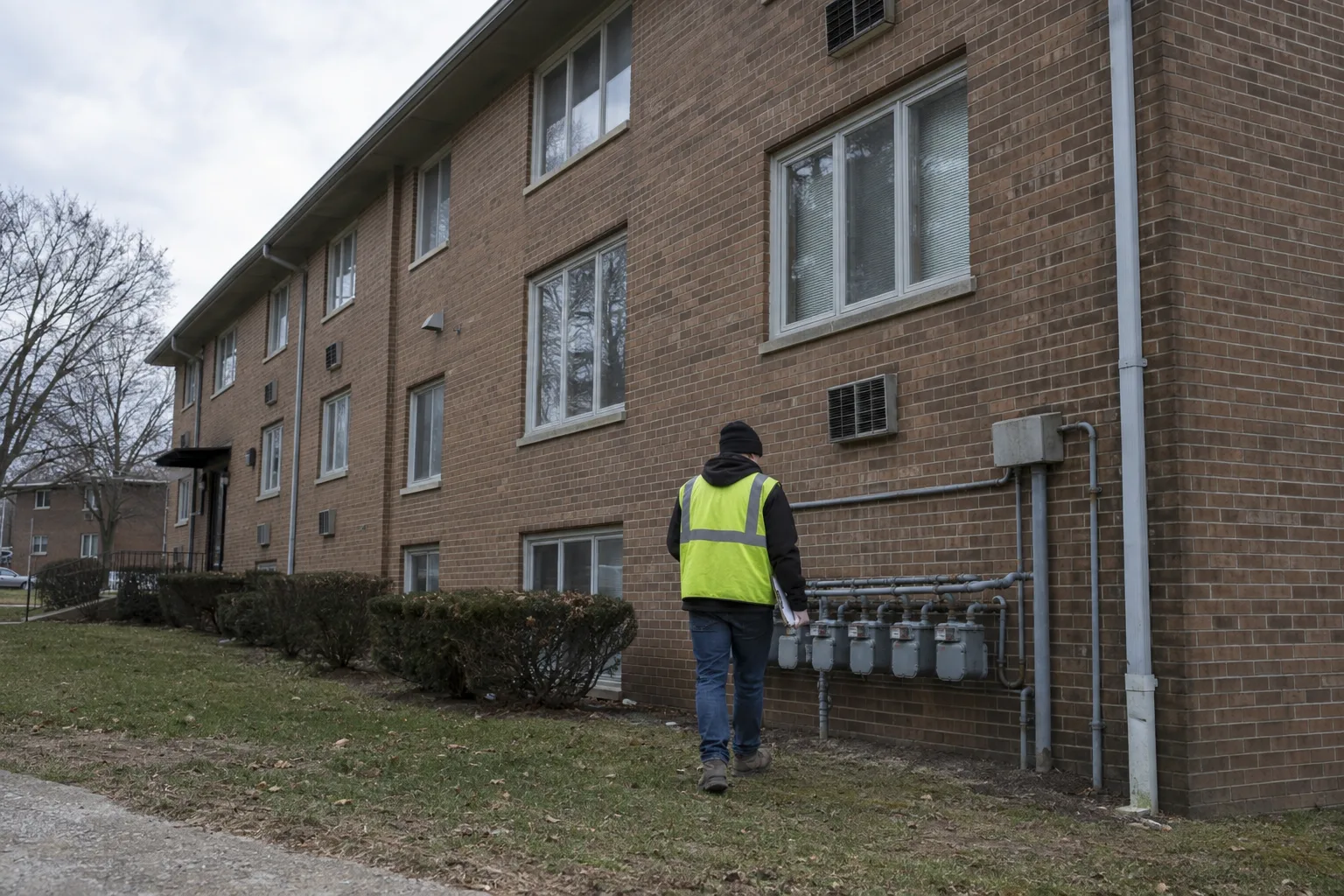
The site visit typically takes one to two full days for a 100-unit property. The assessor walks the roof, mechanical rooms, and a sampled percentage of dwelling units. They photograph and measure components, estimate remaining useful life for each system, and note any immediately observable deficiencies. This is not an NSPIRE or REAC-style scoring inspection, but findings may point to common NSPIRE violations worth addressing.
Cost Estimation and Reserve Modeling
After the site visit, the assessor applies current replacement cost data to each component and builds a 20-year funding schedule. Costs are indexed for inflation. The reserve model shows whether your current reserve balance and annual deposit will cover projected expenditures or leave a shortfall. That gap number is what HUD's underwriter scrutinizes.
Report Drafting and HUD Format Compliance
HUD has a specific report format. The final document must include an executive summary, property description, methodology, component inventory, findings table, 20-year expenditure schedule, and the assessor's qualifications. Reports not following HUD's template get rejected by MAP lenders and HUD reviewers, which adds weeks to your timeline. The National Association of Housing and Redevelopment Officials provides additional guidance on physical assessment standards.
Review and Lender or HUD Submission
The report goes to the MAP lender, OAHP reviewer, or HUD field office depending on the transaction type. Revisions are common, particularly if the reviewer questions component useful life estimates or cost data sources. Plan for at least one revision cycle. Having a consultant who knows HUD's reviewer tendencies cuts the back-and-forth significantly.
CNA Support Within Full-Spectrum HUD Compliance
A capital needs assessment does not exist in isolation. Properties that need a CNA are almost always navigating other HUD compliance requirements at the same time. Reac Nspire Consulting handles the full range.
Pre-NSPIRE and Pre-REAC Inspection Consulting
Walk-throughs using NSPIRE and REAC scoring criteria before HUD sends its inspector. We flag deficiencies and prioritize repairs by point impact. See our pre-NSPIRE inspection guide for the full process.
NSPIRE Repair Services
After the inspection, we coordinate or directly perform the repair work. An honest look at whether NSPIRE repair services are worth the cost for your specific situation.
HUD EIV, TRACS, and HCV Compliance
Properties in the multifamily and public housing programs carry layered compliance obligations beyond the physical inspection. We support EIV compliance, TRACS reporting, and HCV program requirements.
HUD Audit Preparation
If your property is selected for a HUD audit, having organized documentation and a clear physical condition history reduces the risk of findings. A current CNA is one of the documents auditors request.
Section 8 and HQS Inspection Services
For landlords and PHAs managing tenant-based vouchers, Section 8 inspection preparation and HQS compliance checklists are a separate track from the CNA process but equally important for maintaining HAP payments.
Related Reading
- Understanding the Difference Between REAC and NSPIRE →
- How to Pass a REAC Inspection on the First Try →
- NSPIRE Life-Threatening Deficiencies: What to Fix Immediately →
- How NSPIRE Inspection Scoring Works →
- How to Read Your HUD Property Inspection Report →
- Benefits of NSPIRE Inspection for Affordable Housing →
- Navigating NSPIRE Inspection Guidelines →
Practical Notes Before You Commission a CNA
Details that affect cost, timeline, and report acceptance that most property owners don't hear until it's too late.
Assessor Qualifications Matter More Than Price
HUD's MAP guide requires assessors to meet specific education and experience thresholds. An assessor who is cheap but not HUD-qualified produces a report that gets rejected. Ask for their qualifications statement before signing an engagement letter. The HUD.gov multifamily resource page lists current MAP lender requirements.
Timing Relative to Your NSPIRE Inspection
Do not schedule a CNA site visit the week before your NSPIRE inspection. The two processes involve different criteria and different documentation. Rushing the CNA to meet a financing deadline while also preparing for an NSPIRE visit splits your team's attention. Separate them by at least 30 days. See why a pre-NSPIRE inspection is worth scheduling independently.
Stale CNAs Create Problems at Loan Closing
Most HUD transactions require a CNA completed within 12 months of the loan closing date. If your assessment was done 18 months ago and closing slipped, you may need an update report rather than a full new assessment. An update is faster and less expensive, but it requires the original assessor to revisit the site. Plan your timeline accordingly.
Apartment Turnover Rates Affect Reserve Projections
High unit turnover means more interior capital expenditures over 20 years. Flooring, cabinetry, appliances, and bathroom fixtures all have shorter useful lives in high-turnover properties. An assessor who does not ask about your historical turnover rate is skipping a variable that affects the reserve model by potentially tens of thousands of dollars. See our apartment turnover checklist for what drives replacement cost cycles.
Electrical and Code Compliance Issues Get Flagged
A CNA assessor who spots electrical wiring code compliance issues will note them in the report. Those notes go to your lender. Address known electrical deficiencies before the site visit, not after, because the written record becomes part of your file.
State-Specific Market Conditions Affect Cost Data
Labor and material costs vary significantly by region. A CNA using national average cost data for a property in Alaska or Hawaii will be inaccurate. Assessors should use local or regional RSMeans data or documented contractor quotes. This matters most for roofing, HVAC, and elevator replacement line items. See related guides: NSPIRE costs in Alaska and NSPIRE costs in Phoenix.
How a CNA Connects to Your REAC and NSPIRE Strategy
A capital needs assessment and an NSPIRE or REAC inspection serve different functions. The CNA forecasts future capital expenditures. The NSPIRE or REAC inspection scores present physical conditions against HUD's scoring protocol.
Where they overlap: deferred maintenance documented in a CNA is often the same maintenance that generates deficiency findings in an NSPIRE inspection. Addressing items from the CNA backlog before your next scheduled inspection reduces your deficiency exposure.
Properties that have failed an NSPIRE or REAC inspection should review whether a corrective action plan supported by a current CNA would help their case with the HUD field office. See how properties recover after a failed HUD inspection for a state-specific example of this strategy in practice.
For properties in the pre-REAC or pre-NSPIRE preparation stage, the pre-REAC inspection process and the pre-REAC consulting framework are separate services from the CNA but should be coordinated with the same overall compliance calendar.
Local Market Coverage for CNA and Inspection Work
Reac Nspire Consulting covers properties in all U.S. states. Specific recent work has included properties in the Southeast, Mid-Atlantic, Midwest, and Southwest regions.
For HUD REAC inspection preparation work specifically, we have active experience in markets including Atlanta, GA, Miami, FL, Little Rock, AR, and South Carolina, among others.
If your property is outside these markets, we still serve you. Much of the consulting work, including document review, corrective action plan writing, and HUD correspondence support, is handled remotely. Site visits are scheduled and coordinated based on your transaction timeline.
Questions About HUD Capital Needs Assessments
How long does a HUD capital needs assessment take?
For a 50-to-150-unit property, the site visit takes one to two days. Report preparation typically takes two to four weeks after the site visit, depending on the assessor's backlog and how quickly the property provides documentation. If a revision cycle is required, add another two to three weeks. Budget six to eight weeks total from engagement to final accepted report.
What does a HUD capital needs assessment cost?
Fees vary with property size, location, and the complexity of building systems. Smaller properties in accessible markets tend to run lower; large mixed-income developments with complex mechanical systems in remote areas cost more. Get at least two proposals from HUD-qualified assessors, and compare their methodology and qualifications, not just the fee. A cheaper assessor whose report gets rejected costs more in the end.
Can a CNA help us pass our next NSPIRE inspection?
Indirectly, yes. A CNA surfaces the same deferred maintenance items that NSPIRE inspectors look for. Working through the CNA backlog before your inspection date removes deficiency exposure. But a CNA is not a substitute for a pre-NSPIRE inspection walkthrough, which uses NSPIRE's specific scoring criteria to prioritize repairs by point value.
Who reviews the CNA on HUD's side?
For FHA-insured loans, the MAP lender reviews the CNA before submitting to HUD's Office of Multifamily Housing Programs. For RAD transactions, HUD's Office of Recapitalization reviews it. For Mark-to-Market restructurings, it goes through the Office of Affordable Housing Preservation. Each office has its own reviewer tendencies, and knowing which reviewers are assigned to your region can shorten the revision cycle.
Does the CNA replace the REAC or NSPIRE inspection?
No. These are entirely separate HUD requirements. The CNA feeds into financing and reserve planning. The REAC or NSPIRE inspection is a physical condition scoring event conducted by a HUD-contracted inspector. Properties subject to both requirements must satisfy them independently. Understanding the difference between REAC and NSPIRE is essential background if your property is navigating both.
What if our reserves are already underfunded?
An underfunded reserve disclosed in a CNA is not automatically a deal-killer. HUD underwriters look at the gap between the reserve balance and the projected needs, and lenders can structure catch-up contributions into the loan or recapitalization plan. What kills deals is discovering the shortfall late in the process. A CNA completed early gives you time to structure a solution before the underwriter finds the problem first.
Ready to Commission a HUD Capital Needs Assessment?
Whether your CNA is required for a HUD loan, a RAD conversion, or a HAP contract renewal, the process works best when you start with the right consultant. Reac Nspire Consulting operates across all 50 states and has been focused exclusively on HUD inspection and compliance work since 2020.
Call 610-200-2833 to discuss your property's situation before ordering an assessment. We can confirm whether a CNA is required for your transaction type and recommend next steps.
Related services: Inspection, Repair, Compliance, Consulting
Written by
Sam Amoyelle
Founder and CEO, Reac Nspire Consulting
Reac Nspire Consulting provides pre-NSPIRE and pre-REAC inspection consulting, capital needs assessment support, and HUD compliance services across all U.S. states. For questions about this article, call 610-200-2833 or visit our About page.
© 2026 Reac Nspire Consulting. All rights reserved.