
HUD NSPIRE repair and prep
NSPIRE repairs that close the deficiency, not just the work order
Passing an NSPIRE inspection is not about how the work looks. It is about whether each item meets its published standard, and whether you can prove it. We correct the deficiencies that score, and hand you the record.
- 01The standard it was built toThe NSPIRE standard for that item and its inspectable location.
- 02Severity and locationSo you can see what each closed item was worth to the score.
- 03Dated before and after photosTied to the deficiency, not just the work order.
- 04Scope and date logReady for an inspector, a HUD file review or an appeal.
If HUD queries an item later, the evidence already exists.
Why specialist crews
A general contractor can build it right and still cost you points
NSPIRE scores each inspectable item against its own standard, weighted by severity and by where the defect sits: unit, inside, or outside. A repair can be sound by trade convention and still record a deficiency.
That is the gap. A contractor replacing an outlet near a sink will make a safe, code-compliant repair. Whether it satisfies the GFCI and AFCI standard as HUD scores it is a different question, and it is the only one that affects your score.
Our crews work from the published NSPIRE standards rather than from general practice. Every correction is specified against the relevant standard, photographed before and after, and logged with a date and scope, so the evidence is ready if you need to appeal a score.
Most engagements start from a deficiency list. If you do not have one, our inspection services produce it first, which is cheaper than repairing the wrong things. This is one of four programs under our repair services.
The process
Four steps from deficiency list to closed record
Assess the property
We walk the property the way an inspector will, item by item against the standard, recording every deficiency with its severity and inspectable location rather than by trade.
Prioritize by deduction
Life-threatening and severe findings are corrected first, then the items carrying the heaviest deductions. If your date is tight you get a written call on what will and will not be finished.
Repair to standard
Crews can usually mobilize within 24 hours. Each repair is specified to the standard for its location, so the finished item passes on its own terms rather than on appearance.
Re-walk and document
We re-walk the property as an inspector would and close anything outstanding. You receive dated before and after photographs and scope notes for every corrected item.

Standards, not guesswork
The strict guidelines a general contractor cannot meet
HUD publishes a separate standard for every inspectable item, each with its own deficiency list, severity rating and applicable locations. Reading them the way an inspector does is a skill, and HUD publishes guidance on how to read them for exactly that reason.
A contractor who has not worked inside this framework will close out a work order and consider the job done. We close out the deficiency, which is a different test.
- Repairs specified against the standard for the item and its location
- Severity-ranked scheduling so the biggest deductions go first
- Photographic evidence dated and tied to each deficiency
- Records you can put in front of an inspector, a lender or an appeal
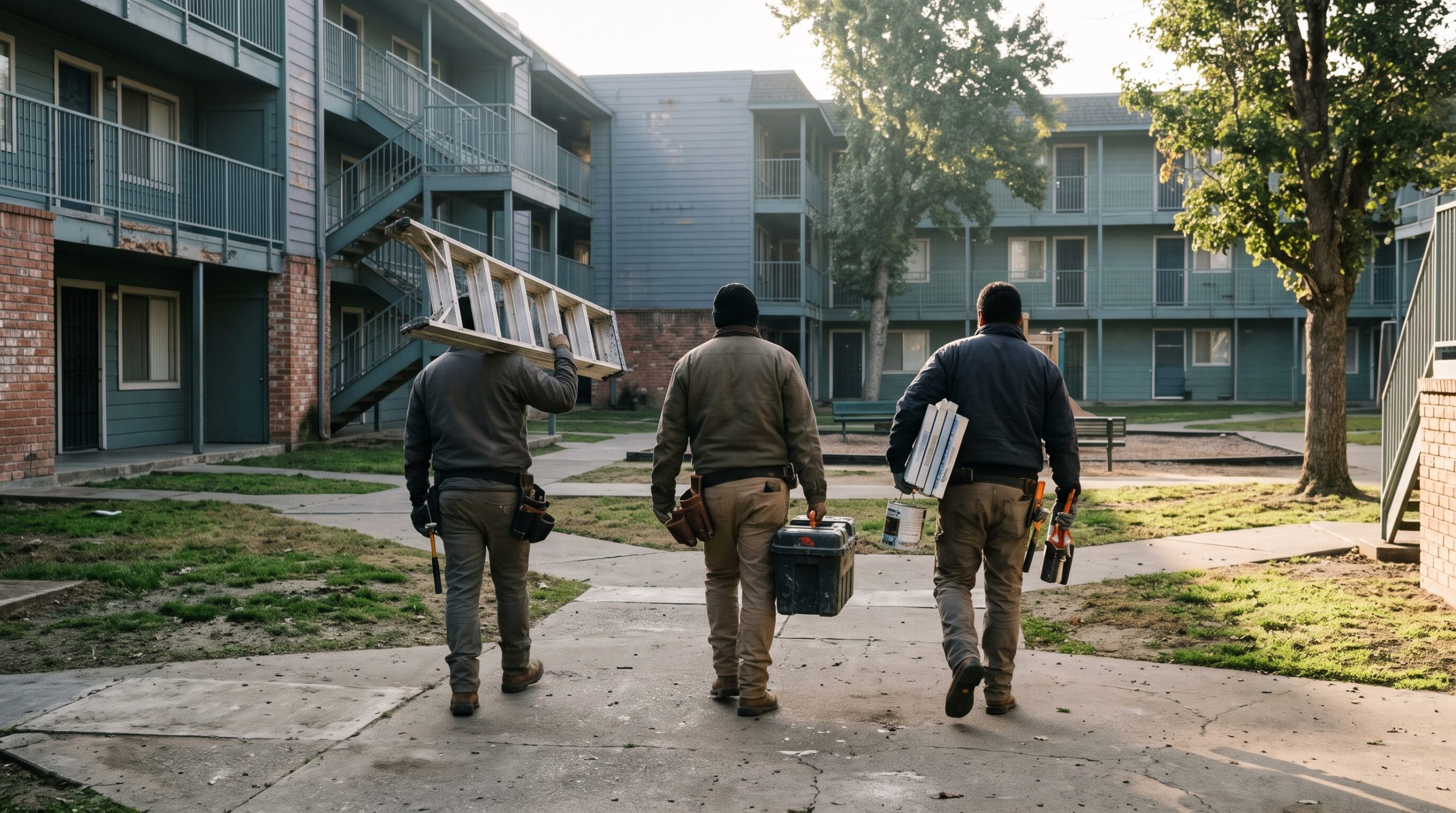
Nationwide delivery
Serving affordable housing communities nationwide
We work with public housing authorities, HUD-assisted multifamily, LIHTC properties and scattered-site portfolios in all 50 states. Thirty crews means a short-notice inspection date does not become a waiting list.
Repeat findings are usually a maintenance problem rather than a repair problem. When the same items reappear each cycle, preventive maintenance costs less than correcting them again, and turnover work keeps units compliant as they change hands.
Commonly corrected
Common NSPIRE deficiencies we correct
Severity and weighting come from the final NSPIRE standards notice, not from how large the repair is. Items marked affirmative have carried point deductions since 1 October 2026.
Smoke and carbon monoxide alarms missing, expired or wrongly located
Electrical service panel defects and exposed conductors
Blocked egress and windows that will not open
GFCI or AFCI protection absent near water sources
Guardrails and handrails missing, loose or non-compliant
HVAC failing to produce adequate heat or cooling
Water heater relief valve and discharge piping
Mold-like substance and unresolved water leaks
Trip hazards on walkways, steps and stairs
Infestation evidence in units and common areas
Deteriorated surfaces and potential lead-based paint
Sharp edges, damaged doors and failed hardware
No deficiency list yet? A survey first is cheaper than repairing the wrong things.
Inspection date set? Crews can usually be on site within 24 hours.
Questions
NSPIRE repair FAQs
Can you work from a deficiency list I already have?
Yes. Bring us your own findings, a consultant's report or a HUD inspection result and we will build the repair scope from it. If you have nothing yet, our inspection services produce the list first, which usually saves money because nothing gets repaired unnecessarily.
How is this different from hiring a general contractor?
A contractor repairs the item. We correct the scored deficiency, which means specifying the work against the NSPIRE standard for that item and inspectable location, then documenting it. Work can be structurally sound and still record a deduction if it does not meet the standard as written.
What if my inspection is only days away?
Call anyway. Crews can usually mobilize within 24 hours, and we sequence by severity so the heaviest deductions are corrected first. Where the date cannot be fully met you get an honest written assessment of what will be finished rather than an optimistic schedule.
Do affirmative requirements change what you repair first?
They can. Since 1 October 2026, GFCI and AFCI protection, guardrails, HVAC, fire labeled doors, interior lighting and minimum electrical provision carry point deductions in Public Housing and Multifamily inspections. We now treat them as scoring items in every repair plan.
Do you provide evidence for an appeal?
Yes. Every correction is logged with dated before and after photographs, the scope of work and the standard it was specified against. That record is what an appeal or a HUD file review actually needs.
Which properties do you work with?
Public housing authorities, HUD-assisted multifamily, Section 8 and PBRA properties, LIHTC developments and scattered-site portfolios, in all 50 states. Multi-state portfolios are handled as a single engagement.